




Time sure does fly. We are just over one month into Andy Burnham’s time as Prime Minister; one month of highs and lows and every TikTok in between.
For Iceland, now “is a great time” for EU membership as they look to join the bloc.
Reform UK continues to show how out of touch they are with British voters.
Russia and the UK are trading verbal barbs after British drones were used in Ukrainian air strikes.
And finally, half measures with Europe will only deliver half of the results. We explore how EU membership can solve migration challenges while simultaneously creating some much needed economic growth.
Read on for your Weekend Wire.
Ice Ice maybe?
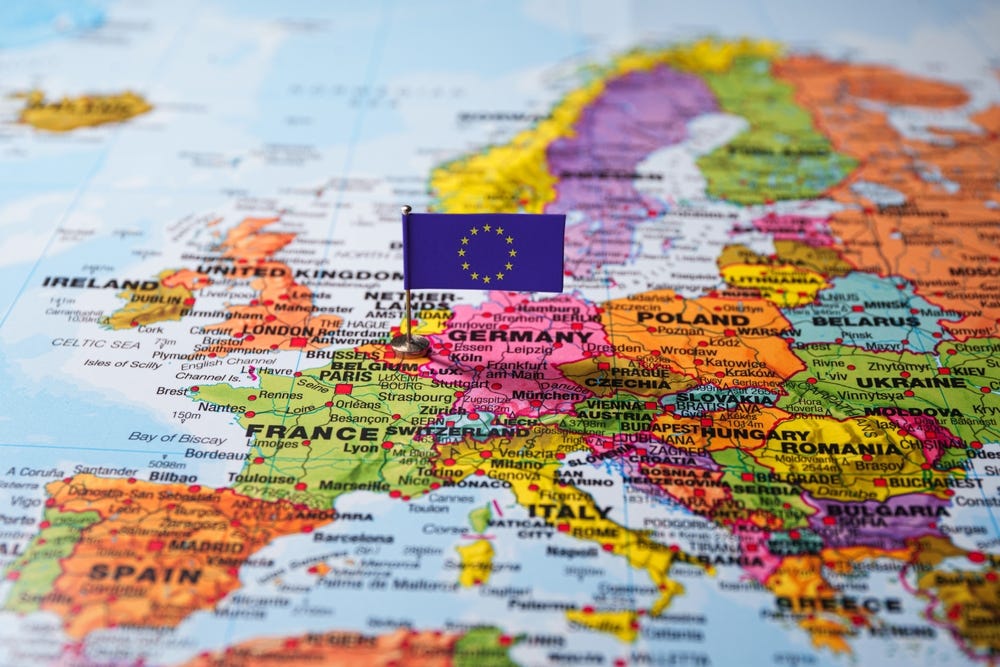
In just over a week, the people of Iceland will head to polling stations to cast their votes in one of the most consequential electoral events in Europe this year. Next Sunday, Icelanders will decide whether they want their government to resume membership negotiations with the EU, thirteen years after a Eurosceptic party brought them to an abrupt halt.
In an eerie reminder of our own fateful referendum, the race is currently neck-and-neck, with the pro-European side leading by a meagre three percentage points. The debate centres on security, the euro, and - you guessed it - fish…
Iceland’s position between the UK and Greenland makes it a vital Atlantic security posting, but despite being in NATO, the small island nation is keen to shore up its ties with Europe in the face of Trump’s tariffs and imperial overtures towards neighbouring Greenland. Yet, with a staggering 40% of Icelandic goods exports coming from fish and seafood, opponents are concerned about the impact of the EU’s Common Fisheries Policy on Iceland’s fishing waters.
Auf Swedensehen
Tensions between Sweden and the United Kingdom continued this week as fresh revelations emerged surrounding Britons being deported from the Scandinavian country. Joyce Thomas, a retired 78-year-old nurse, and Horace Mason, a 74-year-old dementia patient, have both lived in Sweden for over 20 years and are now being asked to leave the country.
The wider picture is damning – almost 4,000 of the just over 14,000 UK applications to remain in Sweden have been refused, a rate three times higher than any other EU member state. Reportedly, 2,500 British nationals have been ordered to leave Sweden since 2021. The crackdown on UK citizens in Sweden comes before the country votes in a crucial election that will test whether Ulf Kristersson’s coalition government backed by the far-right Sweden Democrats will be re-elected.
For those unfamiliar, the Sweden Democrats are a populist nationalist party born from the neo-fascist “Keep Sweden Swedish” movement that rose to prominence in the early 1980s. As part of the coalition agreement between the Sweden Democrats and Kristersson’s Moderate Party, it was agreed that Swedish immigration would be radically reformed and made more challenging for applicants. If the right-wing bloc wins again - Kristersson has announced that the Sweden Democrats will be included in the formal coalition.
Beginner’s luck?
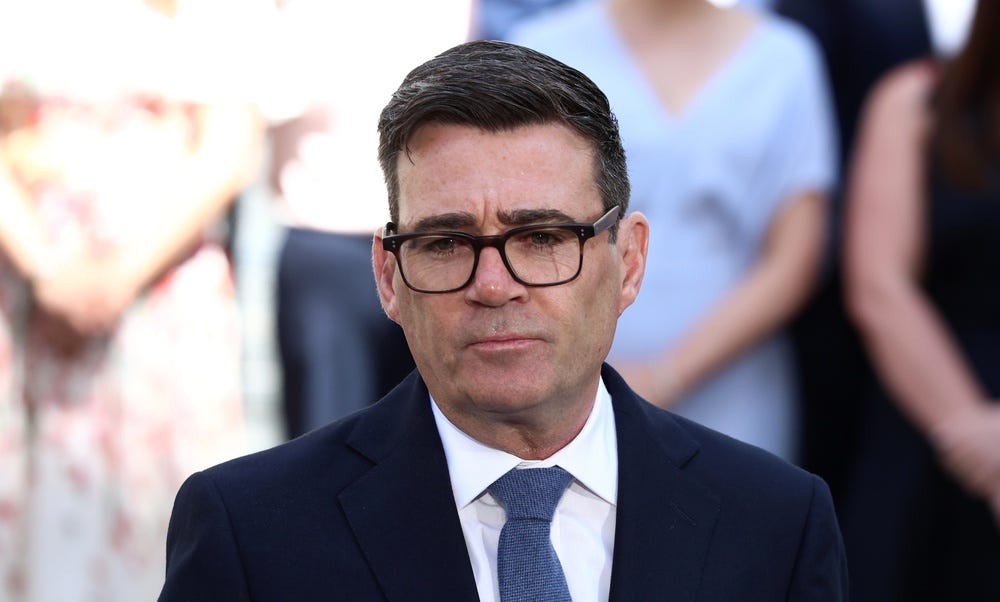
Andy Burnham has had a busy month since becoming Prime Minister.
Despite a rocky start to his week, when it was revealed he had exchanged messages with a person posing as US President Donald Trump’s chief of staff, Burnham chose to push ahead with some new (and expensive) policies.
His latest mission? Ending rough sleeping in England. His first key milestone will be Christmas, when he hopes to have everyone off the streets. This is a massive commitment backed by £442 million and would see around 4,793 rough sleepers moved into a bed. He also plans to convene a national summit on rough sleeping this autumn, bringing together leaders from business, finance, health and faith communities to ask how they can all play a role.
He also announced that starting in April 2027, disabled people in England will be able to travel by bus for free at any time of day. This is a change from the current status quo which only permits free travel between the hours of 09:30 and 23:00 on weekdays.
It appears his first month has gone down well with the public. Some recent polling by YouGov has found that Brits have quite a positive opinion of their new PM, as his net favourability ratings are the highest for any prime minister in more than six years.
On our Substack this week, former Political Editor of The Observer Toby Helm delivered a first-month appraisal for new PM Andy Burnham. Praising the speed at which policies are being thought up and announced, Helm nevertheless calls on Burnham to be both “radical and pragmatic”, particularly in a world where so many issues have become globalised:
“The most worrying thing for the Burnham government is that so many issues he faces - the climate crisis manifesting itself in today’s “tinderbox” Britain, inflation, global debt, Trump - are way beyond his control. But if he is to be more than just another failed PM in a few years time, he has somehow to show he gets them.”- Toby Helm
Will these good vibes stick around? Only time will tell.
Andy’s coming!
This summer, Andy Burnham is travelling to towns and cities across the UK to share his mission for ‘growth in every postcode’ but he hasn’t said how he’ll fund it.
We have an idea. EU membership could boost UK GDP by at least £92 billion and would particularly benefit areas outside of London. That means hundreds of millions every year for regional economies to improve public services, invest in transport and housing, and revitalise our high streets.
While we wait to see where Andy visits next, write to your local paper and let them know how much EU membership could benefit your area – so when he picks up a copy on his travels, he’ll see exactly what he needs to do.
Out of touch
Reform UK has announced that if they get into government, foreign nationals would be banned from claiming almost all kinds of benefits in the UK. A policy that would require renegotiating the UK’s Brexit deal (or, potentially, just tearing it up unilaterally) with the European Union (EU) and put British expatriates’ equivalent rights in Europe at risk. As of 2024, there were around 1.3 million UK nationals living in EU countries, excluding Ireland.
This is yet another example of how increasingly out of touch Reform UK is with what Brits really want.
“Our polling shows that people do want to renegotiate our relationship with Europe, but by moving closer, not by damaging ties with vital allies and punishing our neighbours, colleagues, and friends who have settled status here.”- Tom Bruffato
Patching things up
Liberal Democrat leader Sir Ed Davey has called for the UK to join the EU’s new Migration and Asylum Pact as a way of tackling small boat crossings across the Channel.
The agreement, which came into force in June is designed to speed up the asylum process, increase the number of irregular migrants returned to their home countries and spread responsibility for asylum seekers across the EU.
But we know that half-measures with Europe will only offer temporary relief while renewed EU membership would grant UK access to the bloc’s systems and, incidentally, create massive economic growth.
“Bilateral sticking plasters may offer temporary relief but will never deliver automatic access to the EU’s systems and the economic growth that comes from being in, not out.”- Naomi Smith
Sub-stacked
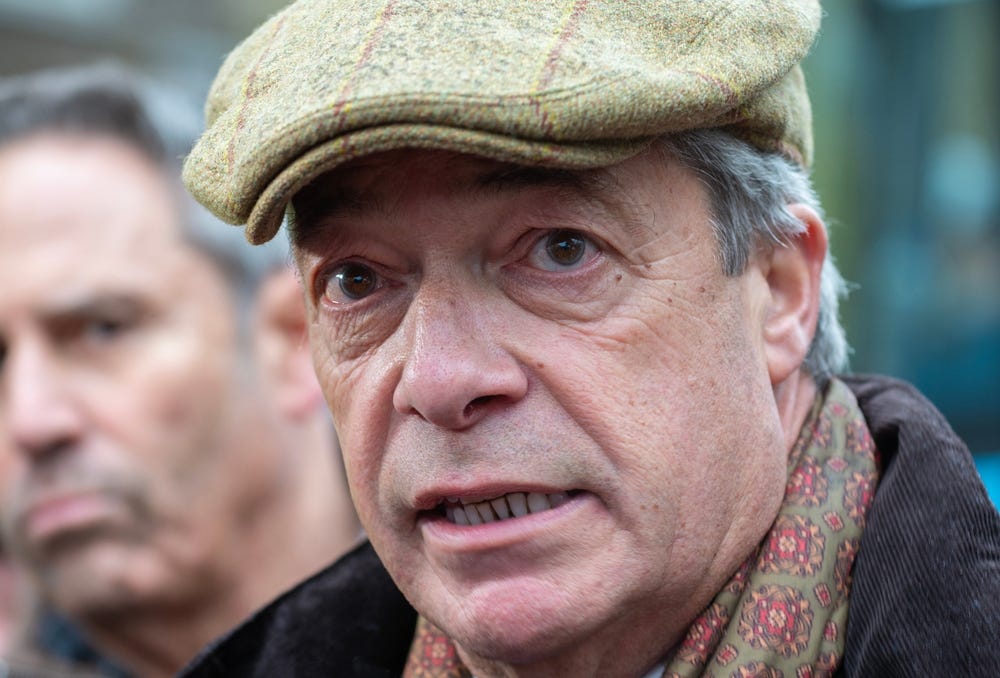
There’s two new articles on our Substack this week for you to sink your teeth into. Kicking off with Cary Mitchell diving into why, for Nigel Farage, last week’s re-election in sunny Clacton isn’t a victory. In fact, it seems as though the Reform UK leader’s decision to “spend all summer arguing with a bin” - as former Chancellor Rachel Reeves eloquently put it - has backfired.
“Farage’s anti-immigration narrative has long proved divisive. His financial scandals, the conduct of those around him, and the profound and instinctive questions of fairness, for his carefully construed man-down-the-pub persona, could be destructive.”- Cary Mitchell

Naomi Smith delivered a moving assessment of how we have moved from shared moments of public joy to intensely private and secluded ones. The areas of communionship have slowly ebbed away; from playgrounds to living rooms, Del Boy to Top of the Pops - every aspect of our free-time is becoming more and more private and curated by algorithms.
“If we want a nation that congregates again rather than one that scrolls alone, we have to make gathering affordable: pay people properly, stop the price gouging, and treat our shared spaces as the national infrastructure they are.”- Naomi Smith
Droning on

Moscow accused Britain this week of “deliberately opting for an escalation of the Ukraine crisis”, saying “the deeper its involvement in the conflict... the higher the price it will pay”. The accusations came after it was revealed that drones made in Britain were used in recent Ukrainian strikes into Russia.
Andy Burnham responded to Russia’s comments by restating his steadfast support for Ukraine and its people. Britain has committed to providing £3bn a year in military aid to Kyiv each year for the next decade, and it was recently announced that the UK would join the EU’s €90bn loan scheme to support the Ukrainian war effort.
Russian threats are nothing new. In May 2024, the British Ambassador to Moscow was summoned to the Russian Foreign Ministry and the Kremlin claimed it was willing to strike British military facilities if Britain continued to support Ukraine.
Feeling a little taxed?

While the war in Iran is another economically damaging move from everyone’s least favourite President, Trump’s preferred stick to wave at countries around the world has been tariffs.
We’ve answered the common questions on tariffs, their impacts, and how EU membership would’ve secured the UK a better deal.

Some great news this week for kids in London and Luton after a large-scale study found that the number of children whose lung capacity was measured as “clinically impaired” dropped from 14% to 9% after the introduction of the Ultra Low Emission Zone (ULEZ) in 2019.
Professor Chris Griffiths of Queen Mary University London said: “I was absolutely stunned when I first saw the results, the speed of catch up in lung capacity in the London group was surprising and impressive. This shows an ambitious clean air zone can drive pollution levels down, rapidly restoring children’s stunted growth”.
An easy win this week for Christine Duffy, a Reform UK councillor who was elected to Newcastle-under-Lyme Borough Council in May and who resigned this week… eventually.
Unfortunately for Duffy, she erroneously submitted a resignation letter to Kidsgrove Town Council - which, for those paying attention, is not the council to which she was elected in May.
More ridiculous still, Duffy had changed her mind about resigning by the time the letter reached the correct address, meaning she continued to serve as a borough councillor before performing another U-turn yesterday afternoon and confirming her resignation. What a palaver!
Summer recess winds down for students and politicians alike.
Icelanders will take part in a national referendum on joining the EU and Ofgem will release the price cap for October.
And just one more week until a long awaited bank holiday to finish off summer.
We will see you then!
Eliza Snider and Josh Edwicker
Senior Press Officer and Senior Content Officer
Best for Britain
Duffy by name and Duff by brain. DOH!